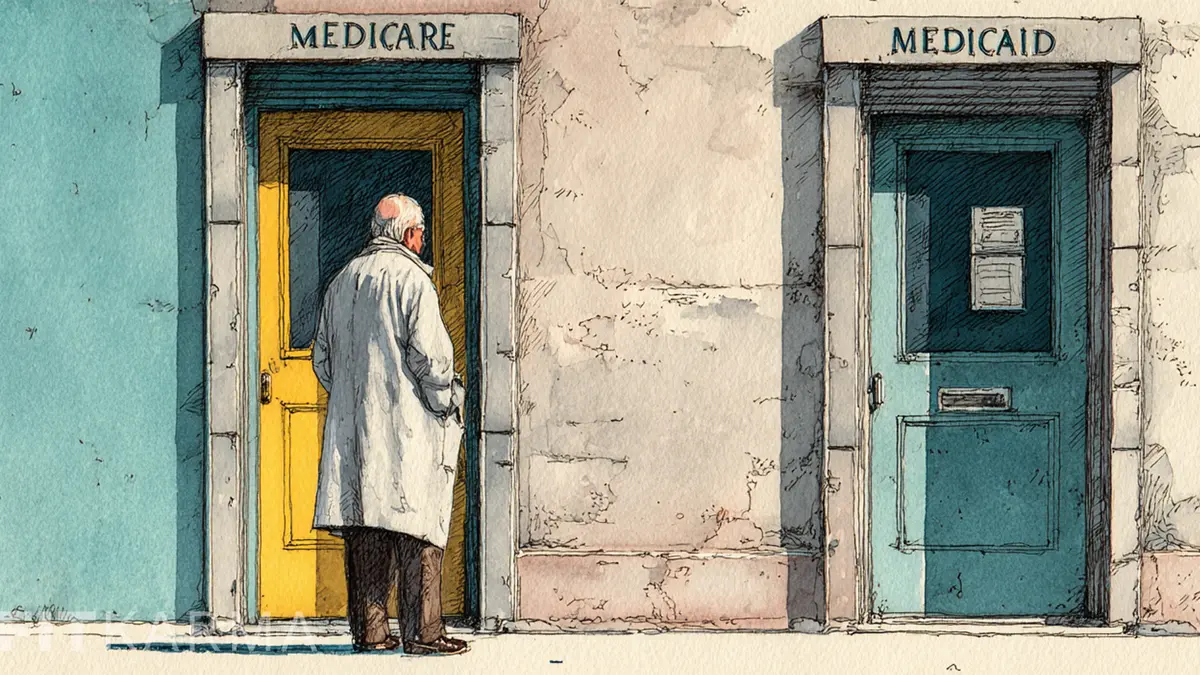
If you’ve ever mixed up Medicaid and Medicare, you’re in good company. The names sound nearly identical, both programs help with health care costs, and they’re both run (at least in part) by the government. But Medicaid and Medicare are not the same thing. In fact, they serve different groups of people, have different rules, and pay for different kinds of care.
The confusion is understandable. Medicaid is based mostly on income and need, while Medicare is based mostly on age or disability. Some people even qualify for both programs at the same time, which adds to the overlap.
Let’s break it down step by step so you can see how these two programs compare.
Want to keep up with guides like this? Sign up for BenefitKarma and stay in the know on benefits that affect your health, family, and finances.
Key Takeaways:
Medicaid and Medicare are not the same; one is income-based, the other is age/disability-based.
Medicare is federal; Medicaid varies by state.
Costs and coverage differ, but both help millions of Americans access health care.
Some people can be covered by both at the same time.
What is Medicare?
 Medicare is a federal health insurance program. That means it’s the same in every state. You qualify if you are:
Age 65 or older, or
Younger than 65 with a qualifying disability, or
Diagnosed with End-Stage Renal Disease (ESRD) or ALS.
Medicare has four main parts:
Part A: hospital insurance (covers inpatient care and some skilled nursing).
Part B: medical insurance (doctor visits, preventive services).
Part C (Medicare Advantage): private plans that combine Parts A and B, often with extras.
Part D: prescription drug coverage.
Most people pay premiums for Parts B and D. Out-of-pocket costs like deductibles and copays are also part of the picture.
 Medicaid is a joint federal-state health insurance program. Every state runs its own version, with federal guidelines. Eligibility depends mainly on income, family size, and sometimes disability status.
