Social Security benefits are once again at the center of the national conversation, as new legislation aims to increase monthly payments, modernize cost-of-living adjustments, and shore up the program’s long-term finances.
On Dec. 16, 2025, Hawaii Sen. Brian Schatz introduced the Safeguarding American Families and Expanding Social Security (SAFE Social Security) Act, a proposal designed to expand benefits for seniors and families across the country.
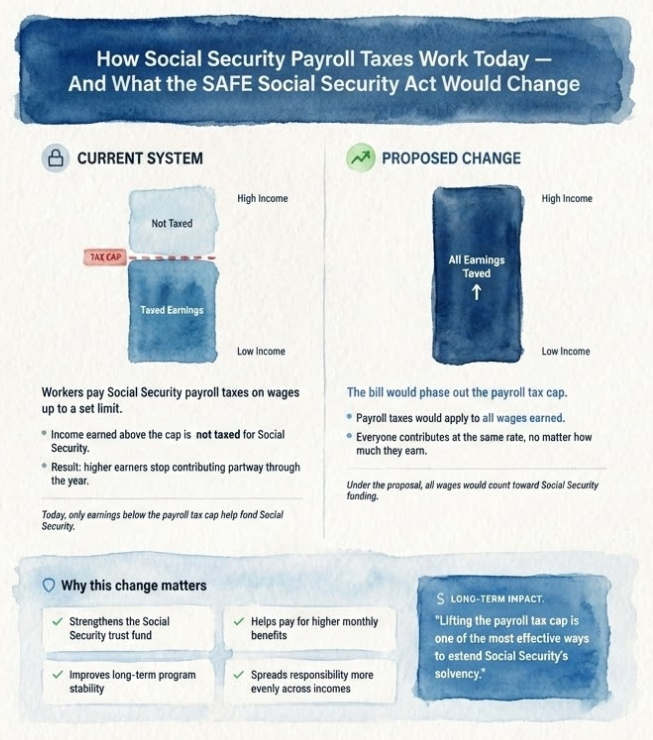
If passed, the bill would increase average Social Security benefits by more than $150 per month, adjust how annual increases are calculated to better reflect retirees’ real-world expenses, and extend the life of the Social Security trust fund by changing how payroll taxes are applied. For millions of Americans who rely on Social Security as a primary source of income in retirement, these changes could be significant.
As debates continue in Washington about the future of Social Security, the SAFE Social Security Act represents a clear push to expand, rather than cut, benefits — while also addressing long-standing concerns about fairness and solvency.
To keep track of all the legislation affecting your benefits, stick with BenefitKarma.com.
Why this bill matters right now
Social Security is the largest and most successful retirement and disability program in U.S. history. Yet many beneficiaries say their monthly checks haven’t kept pace with rising costs for housing, food, health care, and utilities. At the same time, policymakers continue to warn that the Social Security trust fund faces long-term funding challenges if no changes are made.
According to Sen. Schatz, the SAFE Social Security Act is meant to tackle both problems at once: boosting benefits for today’s seniors while strengthening the system for future retirees. That dual focus is a major reason the bill is drawing attention from advocacy groups, labor organizations, and older Americans.
The issue is especially pressing in the senator’s home state of Hawai‘i, where more than 280,000 residents (over one in six people) receive Social Security benefits. By 2040, seniors are expected to make up more than 20 percent of the state’s population, increasing reliance on the program even further.
What the SAFE Social Security Act would do
The bill includes several key provisions aimed at both benefit adequacy and long-term funding. In plain terms, here’s what it proposes:
Phase out the payroll tax cap so that payroll taxes apply to all wages, not just income below a set limit
Increase average monthly benefits by more than $150 through updated benefit calculations
Improve annual cost-of-living adjustments (COLAs) by using the Consumer Price Index for the Elderly (CPI-E), which better reflects seniors’ spending patterns