State Unemployment Benefits In 2026: Why Payouts And Rules Vary More Than You Think
Losing your job? See how 2026 state unemployment benefits differ. Learn about weekly pay, rules, and how to get the most help.

State unemployment benefits are a critical safety net for workers who lose their jobs, but in 2026, where you live matters more than ever.
A recent CNBC report highlights how dramatically unemployment benefits can differ across states, from how much you receive to how long payments last. If you’re navigating job loss or planning ahead, understanding these differences can make a real financial impact.
Unemployment insurance (UI) is a joint federal-state program, but states control most of the rules. That means eligibility requirements, weekly payments, and benefit durations can vary widely. With inflation, labor market shifts, and state-level policy changes all in play, 2026 has become a year where those differences are especially noticeable.
Want to stay on top of changes like this? BenefitKarma keeps you informed on how government benefits work and how to make the most of them.
Why Unemployment Benefits Vary By State
The biggest takeaway from the CNBC report: there is no single “standard” unemployment benefit in the U.S.
Each state sets its own formula based on factors like:
- prior earnings
- state wage levels
- local unemployment rates
- policy decisions made by state legislatures
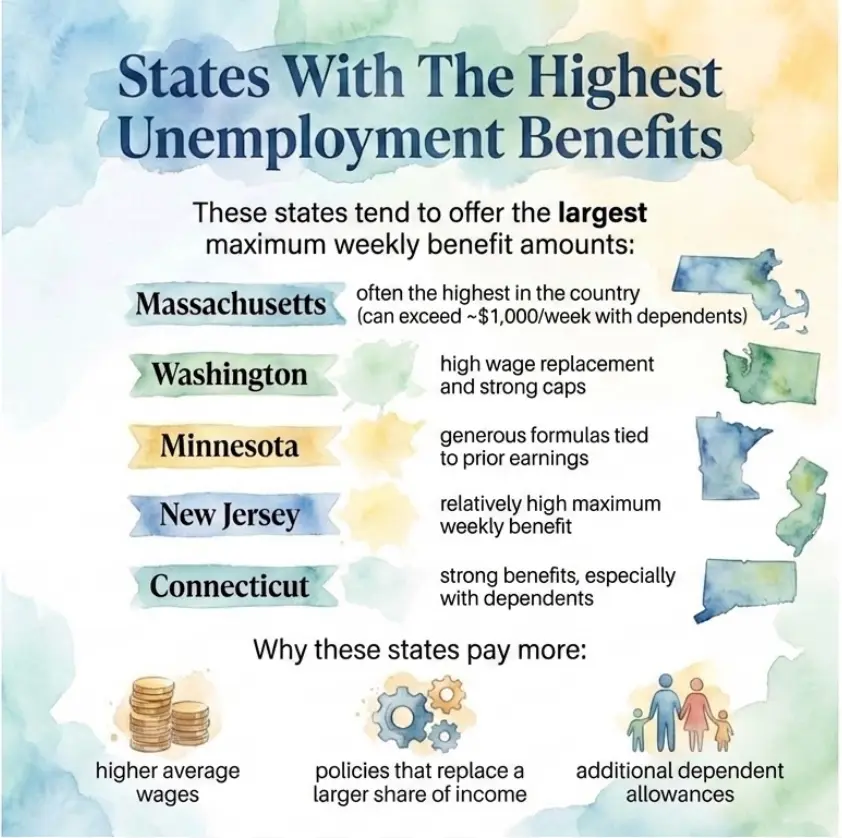
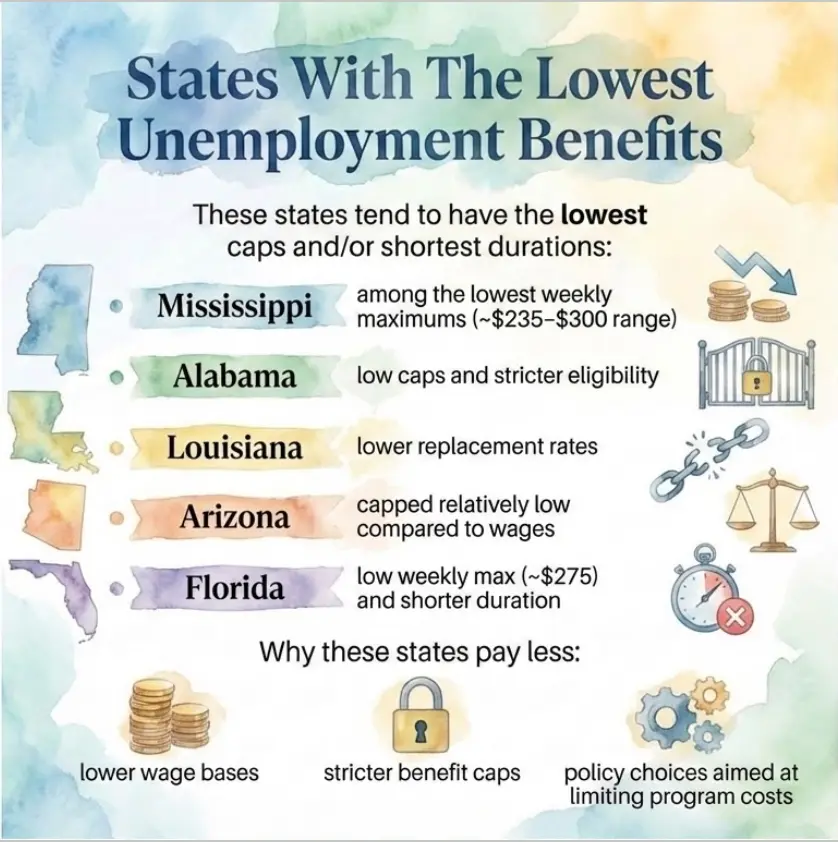
For example, some states replace a higher percentage of your previous wages, while others cap benefits at relatively low amounts. According to CNBC, the maximum weekly benefit can range from a few hundred dollars to over $1,000 depending on the state.
That means two workers with similar salaries could receive very different support simply based on where they live.
How Much You Can Receive
Try it: Find Benefits — Explore income, employment and tax benefits available to you.
Weekly benefit amounts are typically calculated as a percentage of your recent earnings, often around 30% to 50% of your average weekly wage—but caps vary significantly.
Examples from the report show:
- lower-benefit states may cap weekly payments under $400
- higher-benefit states can exceed $800–$1,000 per week
Some states also provide additional allowances for dependents, while others do not.
The key point is that your benefit is not just about what you earned; it’s also about your state’s policy choices.
How Long Benefits Last
Benefit duration is another major difference.
Most states offer up to 26 weeks of unemployment benefits, but that’s not universal anymore. Some states have reduced durations, offering:
- as few as 12 to 20 weeks in certain cases
- variable durations tied to unemployment rates
During periods of high unemployment, extended benefits may kick in, but these are not guaranteed and often require federal or state action.
According to CNBC, several states have moved toward shorter benefit periods in recent years, which can leave workers with less time to find new employment.
Eligibility Requirements To Know
Even qualifying for unemployment benefits can depend heavily on where you live.
Common requirements include:
- earning a minimum amount during a “base period”
- losing your job through no fault of your own
- being actively available and searching for work
However, states differ in how strictly they enforce these rules. Some have:
- stricter job search reporting requirements
- tighter definitions of “suitable work”
- additional verification steps
These differences can affect whether you qualify and how long you continue receiving benefits.
What Unemployment Benefits Pay For
Unemployment benefits are designed to cover basic living expenses while you search for work.
They can help pay for:
- rent or mortgage payments
- groceries and essential household items
- utilities like electricity and water
- transportation costs related to job searching
However, because benefits often replace only a portion of your income, many households still need to adjust spending or seek additional support programs.
How To Apply For Unemployment Benefits
Applying is done through your state’s unemployment office, usually online.
Here’s a general step-by-step (but we've got a full "how to sign up for unemployment" article ready with more detail):
- file a claim with your state’s UI agency
- provide employment history and income details
- verify your identity and job separation reason
- certify weekly (or biweekly) that you’re still eligible
- report job search activities if required
Processing times vary, but many states take 2–4 weeks to issue the first payment (longer if there are verification issues).
How Unemployment Benefits Compare To Other Programs
Unemployment insurance is different from other support programs like:
- Supplemental Nutrition Assistance Program (SNAP), which helps with food costs
- Temporary Assistance for Needy Families (TANF), which provides limited cash aid for low-income families
Unlike these programs, unemployment benefits are:
- based on your work history
- temporary by design
- tied to active job searching
Many people use unemployment benefits alongside these programs to cover gaps.
What To Do If Your Benefits Run Out Or Are Denied
If your benefits are denied:
- you can usually file an appeal through your state agency
- you may need to provide additional documentation or attend a hearing
If your benefits run out:
- check for extended benefits in your state
- explore other assistance programs like SNAP or housing support
- consider workforce training programs that may offer stipends
Understanding your options early can help prevent financial stress later.
The Bottom Line
Unemployment benefits can be a lifeline, but they’re not one-size-fits-all. The CNBC report makes it clear: your state plays a major role in how much help you receive and how long it lasts.
If you’re working, it’s worth understanding your state’s rules before you ever need them. And if you’re currently unemployed, knowing the specifics can help you plan your next steps with more confidence.
For more clear, practical breakdowns of benefits like unemployment insurance, stay connected with BenefitKarma.
Not sure what you qualify for?
A quick conversation can help you understand your options.
Optional — no obligation, fees may apply
Natural-sounding narration — pause, scrub, or speed up anytime.
Want help figuring out your next step?
Optional — fees may apply depending on your situation.
Some people choose to talk to a professional before taking their next step.
This might sound familiar:
You're not sure what to do next
You want someone to walk through your options
The process feels overwhelming
If that sounds like you, this might be worth a quick look.
Takes less than a minute
We only share your info with a service provider if you say yes.
Recommended Tools
Take action with our free tools
Get More from BenefitKarma
Create a free account to unlock all features
- Access premium benefit tools
- Personalized benefit matching
- Your personalized dashboard
Common questions about this guide
Frequently asked questions
Get more from BenefitKarma
Free tools, personalized dashboard & more