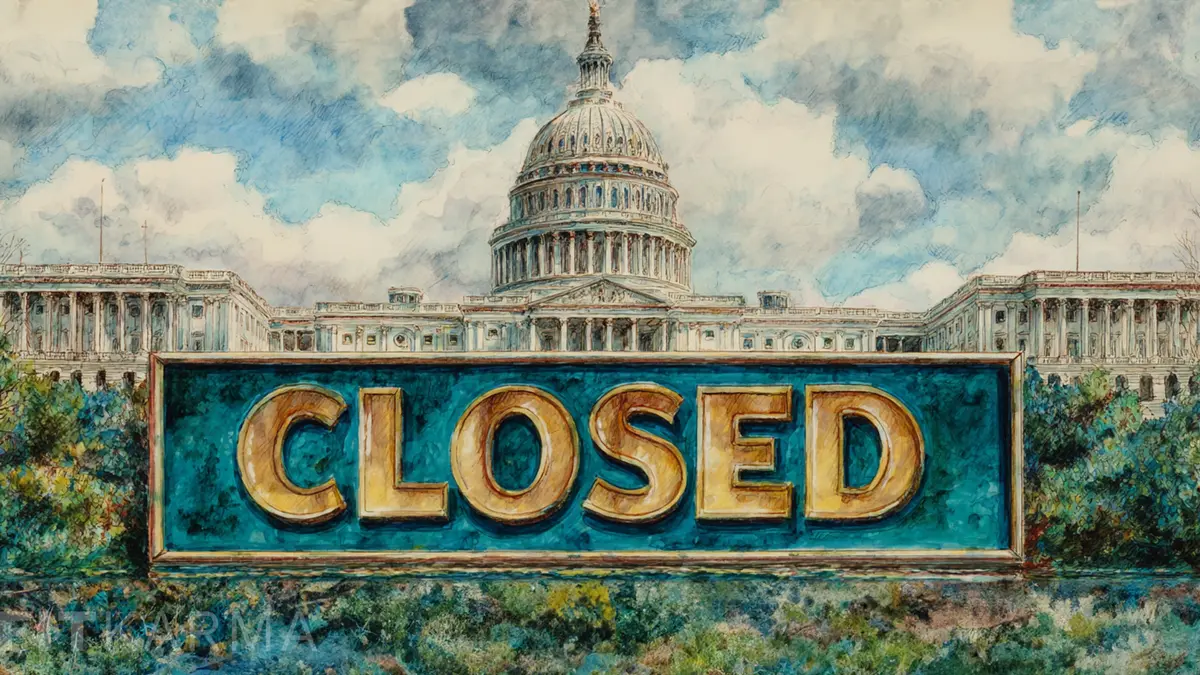
Once the end of the fiscal year came and went on Sept. 30, 2025 without a new spending bill, the U.S. government began its 2025 government shutdown.
What exactly does that mean? For millions of Americans, a shutdown could disrupt federal services, delay benefit processing, and create financial uncertainty.
At a time when there's a lot of political division and little possibility of working across the aisle to come up with a fast resolution, it may take some time to see the government go back to work.
So, what’s driving this debate, and how could it affect your benefits? Let’s break it down step by step.
To keep tabs on all the latest information affecting your benefits, sign up for a benefitkarma.com account!
Why is there a 2025 government shutdown?
The September deadline is all about Congress approving new funding to keep federal agencies running. Here are the big sticking points that have separated Republicans and Democrats:
Healthcare Tax Credits: Democrats want to extend Affordable Care Act subsidies set to expire after 2025, while Republicans have pushed back. It’s especially contentious in the wake of the benefits-slashing H.R. 1 (aka the “One Big Beautiful Bill Act”).
Filibuster Rules: Even though Republicans control Congress and the White House, they still need some Democratic votes in the Senate. That means bipartisan cooperation is necessary.
Political Climate: After earlier budget showdowns in March, Democrats say they’re less willing to compromise this time.
Put simply, the fight is less about whether the government should stay open, and more about what policies get attached to the funding bill.
When does a government shutdown begin?
If Congress doesn’t pass either a full funding bill or a temporary “continuing resolution” (often called a CR) by Sept. 30, 2025, the government will shut down at 12:01 a.m. on Oct. 1, 2025.
