LIHEAP 2026-27: Heating Help Is Open — How to Apply in Your State
Federal heating-assistance money reached states earlier than usual this year, and applications are now open in most of the country. Here's what LIHEAP pays for, who qualifies, and how to apply where you live.

If you're worried about keeping the heat on this winter, now is the time to apply for help. The Low Income Home Energy Assistance Program (LIHEAP) — the main federal program that helps households pay heating and cooling bills — is taking applications in most states for the 2026-27 season.
Free DIY tool
Benefit Eligibility Screener
What benefits might I qualify for? Answer a few questions and see VA, disability, food, housing, and health programs that may fit you.
Try the free toolThis year the money arrived on time. On Oct. 9, 2026, the U.S. Department of Health and Human Services released about $3.63 billion in LIHEAP block grant funding to states, territories and tribes for fiscal year 2027. That's roughly 90% of the program's funding under the current federal stopgap budget, and it went out weeks earlier than last year, when a government shutdown held the money up until Nov. 28.
But funding is limited and most states pay on a first-come, first-served basis. Applying early gives you the best chance.
What LIHEAP is
LIHEAP is a federally funded program, but every state (and many tribes) runs its own version. That means each state sets its own:
- Application dates — some are open year-round, others only for a few weeks
- Income limits — usually based on a percentage of the federal poverty level or your state's median income
- Benefit amounts — which vary by household size, income, fuel type and where you live
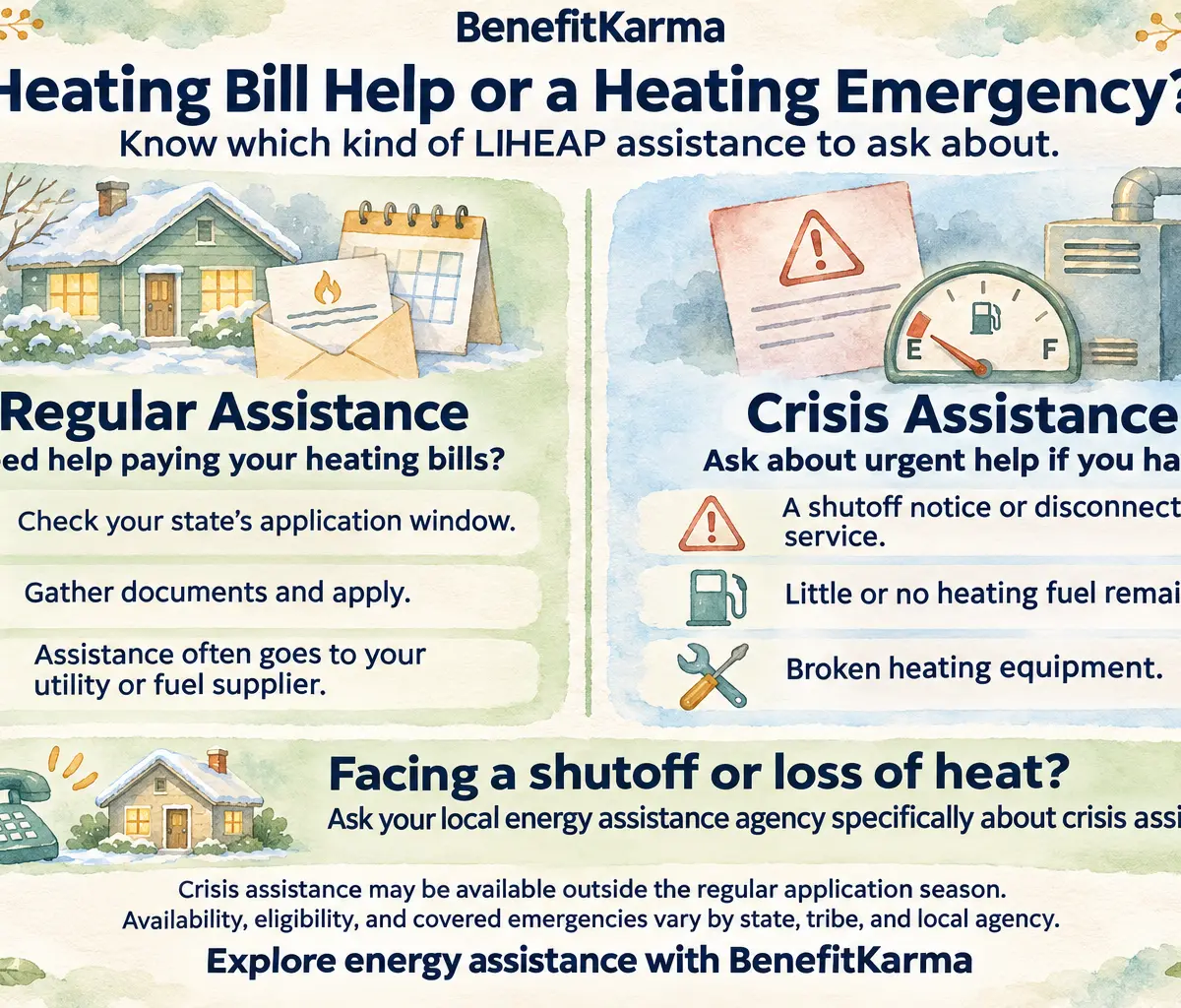
In most cases, the benefit isn't paid to you directly. It goes straight to your utility company or fuel supplier as a credit on your bill.
Many states also offer crisis assistance if you've received a shutoff notice, have already been disconnected, are almost out of heating fuel, or have a broken furnace. Crisis help is often available outside the regular season.
Who qualifies
Eligibility depends on your household's income and size, and the exact limits differ by state. In general:
- Households with income at or below 150% of the federal poverty level, or 60% of the state median income, may qualify (states choose which standard to use).
- Households that already receive SNAP, SSI, TANF or certain veterans' benefits may automatically qualify in some states.
- Many states put households with older adults, people with disabilities, or young children at the front of the line. HHS asked states to prioritize these households again this year.
You can rent or own your home. Renters whose heat is included in rent may still qualify in some states.
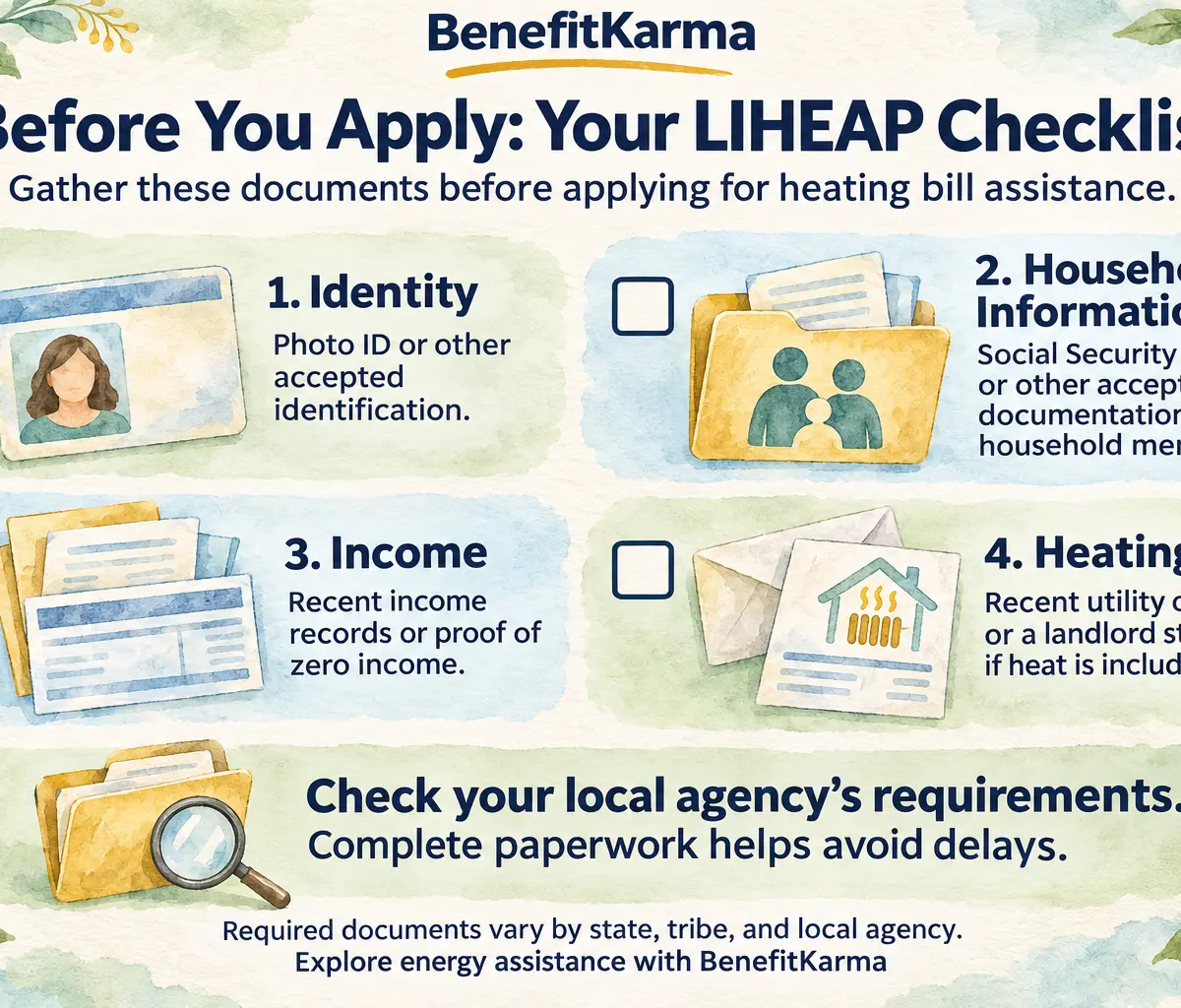
What you'll need to apply
Requirements vary, but most applications ask for:
Free DIY tool
Benefit Eligibility Screener
What benefits might I qualify for? Answer a few questions and see VA, disability, food, housing, and health programs that may fit you.
Try the free tool- Proof of identity for the applicant
- Social Security numbers (or other accepted documentation) for everyone in the household
- Proof of household income — often for the past 30 days, or proof of zero income
- A recent utility or fuel bill, or a statement from your landlord if heat is included in your rent
Gather these before you start. Missing paperwork is one of the most common reasons applications get delayed.
When and where to apply: selected states
Here's where some states stood as of early November. If your state isn't listed, check your state's energy assistance page or call the National Energy Assistance Referral line at 1-866-674-6327.
| State | 2026-27 application window |
|---|---|
| Connecticut | Open now |
| District of Columbia | Online since Oct. 20; in-person appointments start Nov. 10 |
| Illinois | Open to all eligible households since Nov. 1 (priority groups since Oct. 1) |
| Indiana | Oct. 1, 2026 – Apr. 30, 2027 |
| Kentucky | Fall Subsidy: Nov. 9 – Dec. 18, through local Community Action Agencies |
| New Jersey | Oct. 1, 2026 – June 30, 2027 |
| New York | Regular HEAP opened Nov. 2; Emergency HEAP opens Jan. 4, 2027 |
| Ohio | Winter Crisis Program: Nov. 1, 2026 – Mar. 31, 2027 |
| Pennsylvania | Nov. 2, 2026 – Apr. 23, 2027 |
| Virginia | Fuel assistance: Oct. 13 – Nov. 13, 2026 (closing soon); crisis help later in the season |
| Wisconsin | Year-round applications |
| Wyoming | Oct. 1, 2026 – Apr. 30, 2027 |
In many states — including Kentucky and Idaho — you apply through your local Community Action Agency rather than a state office. Your state's LIHEAP page will list the agency that serves your county.
Why you shouldn't wait
LIHEAP money can run out before winter ends. Even though this year's first round of funding arrived early, a few things could affect what's available later in the season:
- The current federal budget is temporary. Congress funded the government through Dec. 11, 2026, with a stopgap spending bill. The remaining 10% of LIHEAP money depends on what Congress does next.
- The program's long-term future is being debated. The White House proposed eliminating LIHEAP in its fiscal 2027 budget, as it did for 2026. Congress rejected that proposal last year and funded the program at about $4.045 billion.
- Heating costs are rising, especially for households that use heating oil or propane, which can stretch state budgets further.
None of this changes your ability to apply today. It's simply a reason to get your application in early.
Watch out for scams
LIHEAP is free to apply for. No legitimate agency will charge you a fee to apply, and the federal government doesn't send LIHEAP grants directly to individuals. If someone asks you for money or your bank information to "unlock" energy assistance, report it to the HHS fraud hotline at 1-800-447-8477.
Bottom line
If you're struggling with heating bills, check your state's LIHEAP dates this week and apply as soon as you can. If you've already received a shutoff notice, ask specifically about crisis assistance — and ask your utility about winter shutoff protections, which many states have in place from late fall through early spring.
Not sure what you qualify for?
A quick conversation can help you understand your options.
Optional — no obligation, fees may apply
Want help figuring out your next step?
Optional — fees may apply depending on your situation.
Some people choose to talk to a professional before taking their next step.
This might sound familiar:
You're not sure what to do next
You want someone to walk through your options
The process feels overwhelming
If that sounds like you, this might be worth a quick look.
Takes less than a minute
We only share your info with a service provider if you say yes.
Recommended Tools
Take action with our free tools
Get More from BenefitKarma
Create a free account to unlock all features
- Access premium benefit tools
- Personalized benefit matching
- Your personalized dashboard
Common questions about this guide
Get the latest benefit updates, straight to your inbox
Plain-English updates on SNAP, Medicaid, VA and Social Security — one email a week.
Get more from BenefitKarma
Free tools, personalized dashboard & more
