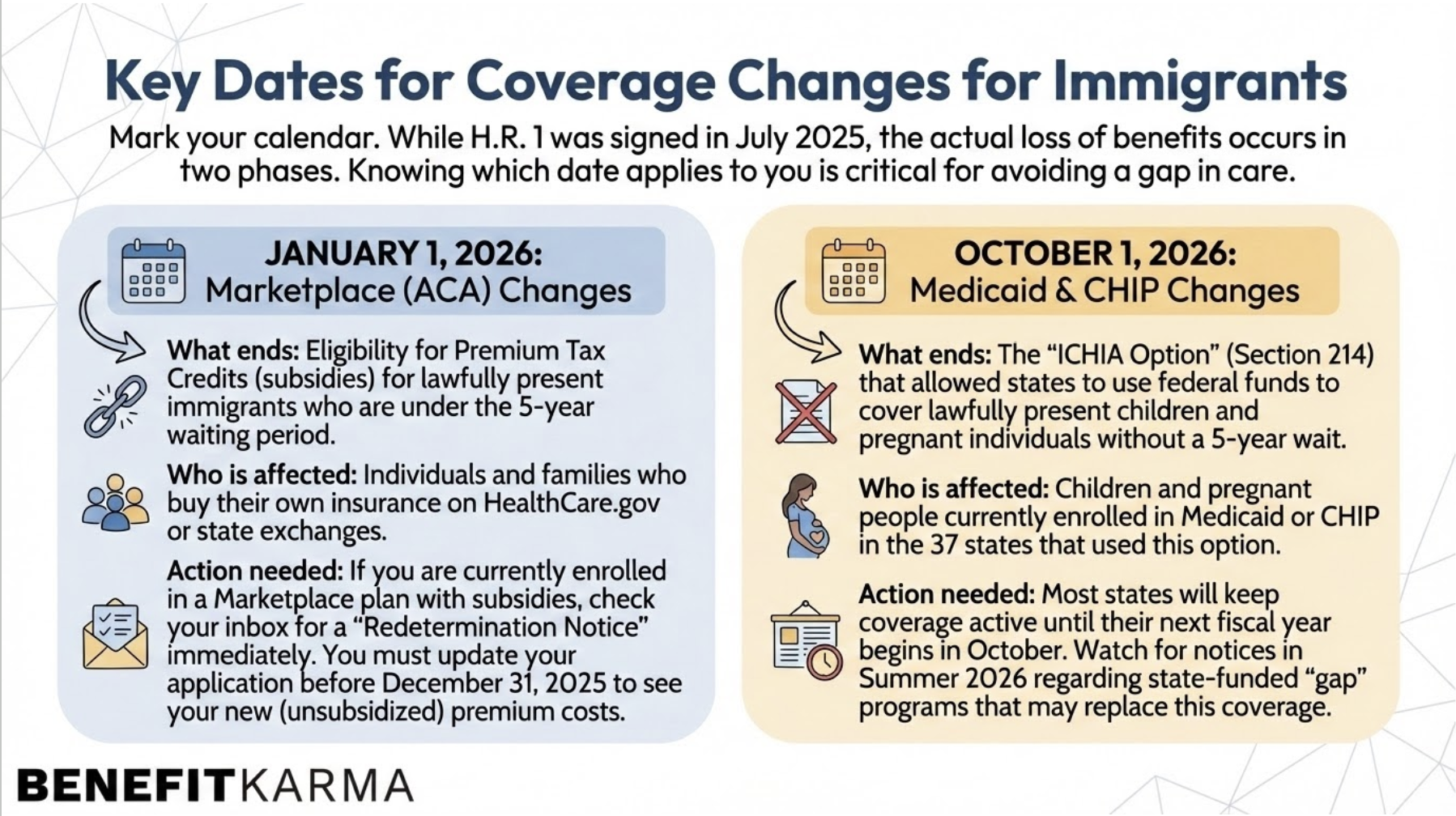
A major change in federal law could soon disrupt health coverage for more than one million people. The recently passed One Big Beautiful Bill Act (H.R. 1) eliminates the long-standing federal option that allowed states to offer Medicaid and CHIP to certain lawfully present immigrants.
For the last 20 years, 37 states used this option to ensure children, pregnant people, and low-income adults could get essential health care. Now, that pathway is being removed.
Whether you’re a parent, a Medicaid enrollee, or someone helping others navigate benefits, understanding what this law changes and what steps you may need to take is key.
For ongoing updates about how federal laws affect your health, income, and family stability, visit BenefitKarma.com.
What the 2025 law actually changes
The OBBBA eliminates the federal “lawfully present” option that states have relied on since 2002. Under previous rules, states could choose to provide Medicaid and CHIP to immigrants who were lawfully present in the U.S., even if they did not qualify under the traditional, more restrictive federal categories.
With the elimination of this option:
States are no longer allowed to cover these immigrants through Medicaid or CHIP, even if they want to.
Coverage will end for groups who used this pathway, including children, pregnant people, and adults under Medicaid expansion.
Eligibility is narrowed to the older, stricter federal categories, which exclude many otherwise lawfully present individuals.
This is not an administrative interpretation. It is a statutory change, meaning states must comply.
How many people lose coverage, and in which states?
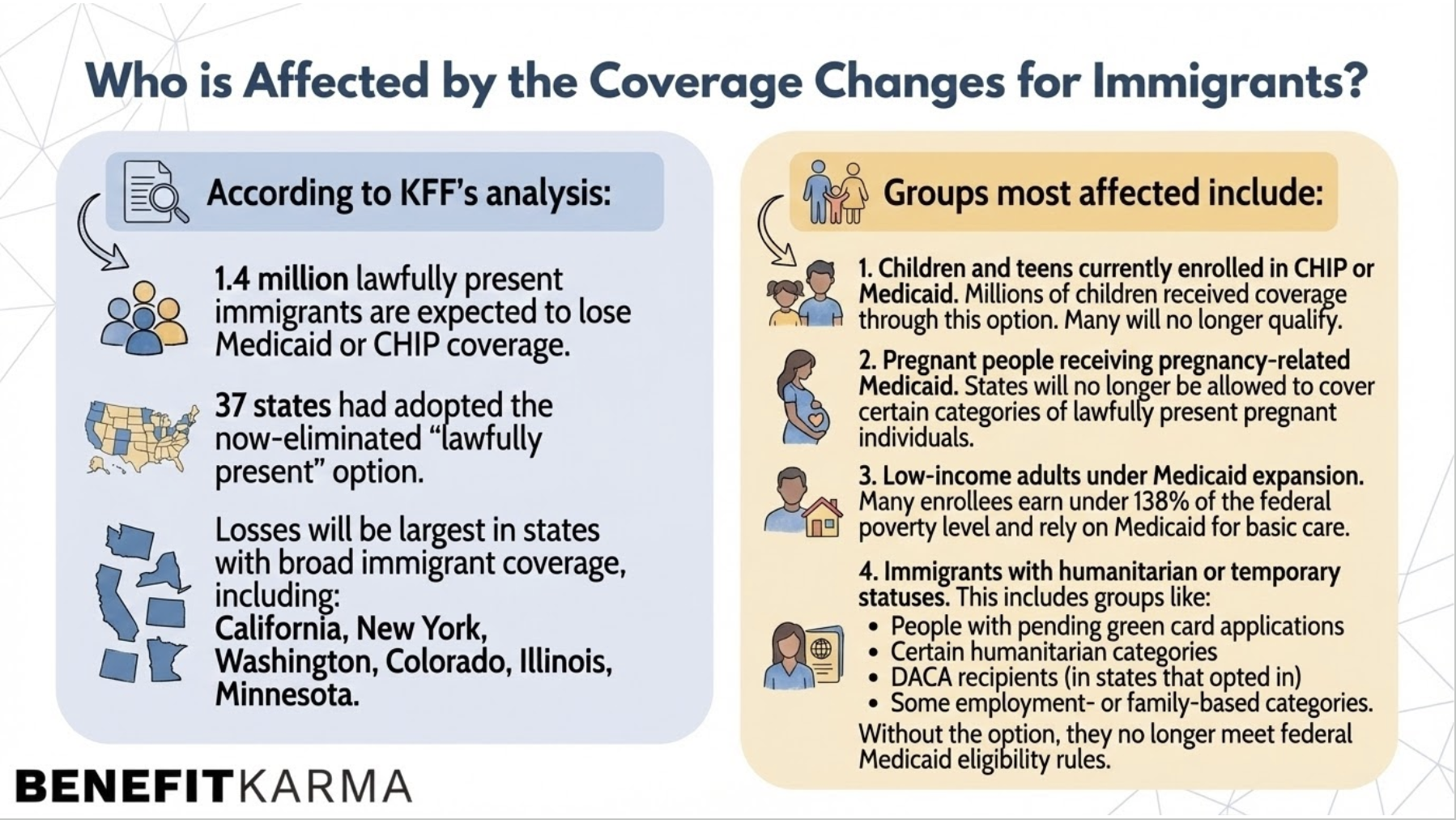
According to Kaiser Family Foundation’s analysis:
1.4 million lawfully present immigrants are expected to lose Medicaid or CHIP coverage.
37 states had adopted the now-eliminated “lawfully present” option.
Losses will be largest in states with broad immigrant coverage, including:
California
New York
Washington
Colorado
Illinois
Minnesota
Groups most affected include:
1. Children and teens currently enrolled in CHIP or Medicaid
Millions of children received coverage through this option. Many will no longer qualify.
2. Pregnant people receiving pregnancy-related Medicaid
States will no longer be allowed to cover certain categories of lawfully present pregnant individuals.
3. Low-income adults under Medicaid expansion
Many enrollees earn under 138% of the federal poverty level and rely on Medicaid for basic care.
4. Immigrants with humanitarian or temporary statuses
This includes groups like:
People with pending green card applications
Certain humanitarian categories
DACA recipients (in states that opted in)
Some employment- or family-based categories