Affordable housing is increasingly out of reach for low-income families, with rising rents and limited availability of rental units. In a recent Pew Research Center survey, 69% of Americans said they were “very concerned” about the cost of housing, up from 61% in April 2023.
As demand for affordable housing grows, many are forced to live in overcrowded or substandard conditions, or face homelessness altogether. The Low-Income Housing Tax Credit (LIHTC) helps solve this issue by offering tax incentives to developers to build or rehabilitate affordable rental homes, providing much-needed housing options for low-income families.
In this post, we’ll dive deep into the common questions surrounding LIHTC, so you can better understand how it works and how it benefits communities.
Key Takeaways:
What is LIHTC?: The Low-Income Housing Tax Credit (LIHTC) is a federal program that incentivizes private developers to build or rehabilitate affordable rental housing for low-income households. The program offers developers tax credits in exchange for setting aside a portion of their units for low-income tenants.
Eligibility Criteria: To qualify for LIHTC housing, tenants must earn 60% or less of the area median income (AMI). Rent is capped at 30% of the tenant’s income, ensuring affordability for those in need.
Benefits of LIHTC: The program boosts the availability of affordable housing by incentivizing private investment, helping to revitalize communities and reduce the financial burden on local governments.
How to Apply: LIHTC housing is managed by property developers and local housing authorities. To apply, you must contact these agencies directly and provide documentation to verify your eligibility.
Impact on Communities: LIHTC plays a crucial role in creating sustainable and vibrant neighborhoods, stimulating local economies, and providing long-term solutions to the affordable housing crisis.
What is the Low-Income Housing Tax Credit (LIHTC)?

The Low-Income Housing Tax Credit (LIHTC) is a federal tax incentive program established in 1986 under the Tax Reform Act. It encourages private developers to build, rehabilitate, and maintain affordable housing for low-income individuals and families. Through this program, property developers can receive tax credits over a 10-year period, which they can use to offset their federal tax liability.
These credits are provided to investors or developers who agree to reserve a portion of their rental units for low-income tenants. The goal of the program is to stimulate the development of affordable housing in areas where there is a shortage of such housing.
How does the Low-Income Housing Tax Credit (LIHTC) work?
LIHTC provides a dollar-for-dollar reduction in federal tax liability for developers of qualified affordable rental housing. To participate, developers must comply with several requirements:
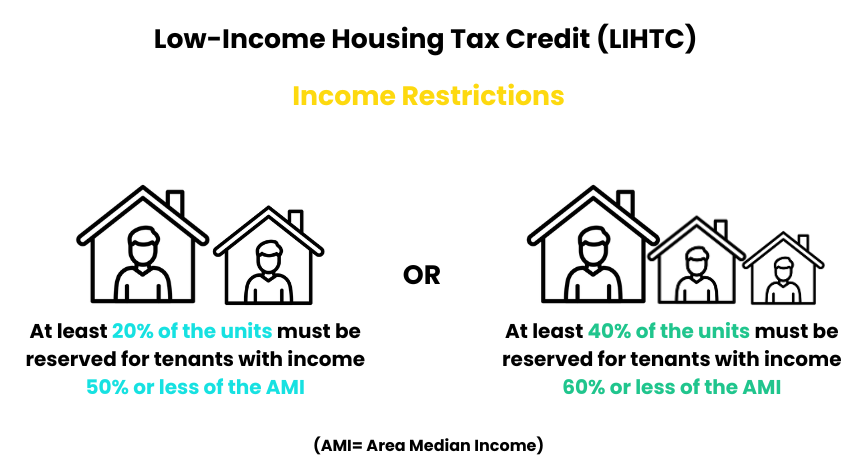
Income Restrictions: At least 20% of the units must be reserved for tenants whose income is 50% or less of the area median income (AMI), or at least 40% of the units must be reserved for tenants whose income is 60% or less of the AMI.
Rent Limits: Rent for the low-income units is capped at a level that is affordable based on the income restrictions. Rent cannot exceed 30% of the income limit for the target population.
Compliance Period: Developers must maintain the affordability of the housing for a minimum of 15 years, though in many cases, the property remains affordable for 30 years or longer.
By incentivizing developers with tax credits, the program helps reduce construction costs, making it financially viable to build housing for people who might otherwise struggle to afford a place to live.
For more details about the specific rules for LIHTC, you can check out resources like the National Council of State Housing Agencies.
Who is eligible for the Low-Income Housing Tax Credit (LIHTC)?
LIHTC housing is designed to assist low-income households, but the exact eligibility criteria depend on the area’s median income and the specific requirements of the development. Generally, tenants must meet the following criteria:
Income Limits: Tenants must earn no more than 60% of the median income for the area in which they live. For example, in a high-cost urban area, the income limits might be higher, while in rural or less expensive areas, they could be lower.
Affordability Requirements: Rent must be affordable, generally capping out at 30% of the tenant's income.
Local housing authorities and developers are responsible for determining whether an individual qualifies for a specific LIHTC unit. For a more detailed understanding of income limits and eligibility, visit the U.S. Department of Housing and Urban Development (HUD) website.
How is the LIHTC different from other housing programs?

Unlike other federal housing programs like Section 8, which provides direct rental assistance to eligible households, the LIHTC focuses on creating affordable housing units through tax incentives for private developers. While both programs aim to address the affordable housing shortage, they operate differently: