
Finding affordable housing is one of the biggest challenges facing low-income families in the U.S. With rising rental costs and limited availability of affordable units, many families struggle to secure safe and stable housing. The lack of affordable options can lead to housing instability, stress, and financial strain. Thankfully, programs like Project-Based Rental Assistance (PBRA) offer a lifeline by providing long-term rental subsidies that keep housing costs manageable for eligible families. In this post, we’ll dive into how PBRA works, its benefits, and how you can apply to take advantage of this essential program.
Key Takeaways:
What PBRA is: Project-Based Rental Assistance (PBRA) is a HUD program that offers rental subsidies to specific housing projects, ensuring affordability for low-income families.
Eligibility: To qualify, your income must be below 50% of the area median income, with eligibility criteria varying by property.
Application Process: Applications are submitted directly to the property management or through your local Public Housing Agency (PHA).
Benefits: PBRA provides long-term stability, allowing tenants to pay affordable rent based on their income, with the government covering the remaining cost.
Long-Term Assistance: PBRA contracts typically last 20 years, ensuring that rental assistance is available over the long term.
What is Project-Based Rental Assistance (PBRA)?
Project-Based Rental Assistance (PBRA) is a program overseen by the U.S. Department of Housing and Urban Development (HUD) that helps ensure affordable housing by providing rental subsidies to specific properties. The subsidies are attached to the property itself rather than the individual tenant, meaning that qualifying tenants pay a reduced rent based on their income, while the government covers the remaining portion.
Government Subsidies: The government pays a portion of the rent directly to the property owner.
Rent Adjustments: Tenants are required to pay the balance, which is typically calculated at 30% of their adjusted household income.
Long-Term Contracts: The rental assistance is typically provided under long-term contracts lasting up to 20 years, ensuring stability for both tenants and landlords.
To learn more, visit HUD's PBRA overview.
How does PBRA work?
 Project-Based Rental Assistance helps low-income individuals access affordable housing by directly linking rental assistance to specific housing projects. Here’s a breakdown of how PBRA works:
Eligibility Verification: Tenants must meet income qualifications, usually having an income below 50% of the area median income (AMI).
Subsidy Payment: HUD pays a portion of the rent directly to the landlord. The tenant pays the remainder, based on their income.
Property-Based Assistance: The rental subsidy is tied to the property, meaning tenants must reside in that specific building or housing development.
Landlord Participation: Property owners must enter into an agreement with HUD to participate in PBRA, and they must maintain the property and provide a certain level of services to tenants.
For more details, visit the National Counsel of State Housing Agencies page.
What are the benefits of PBRA?
PBRA offers several key benefits, both for tenants and property owners. Some of the most notable advantages include:
Affordable Housing: Ensures long-term affordability for tenants, preventing excessive rent increases.
Stable Housing: Helps families maintain stable housing by linking their rent to their income rather than market fluctuations.
Preserves Affordable Housing: Encourages property owners to maintain their buildings in good condition and continue offering affordable units.
Incentivizes Landlords: Property owners are incentivized to participate by guaranteed payments from the government, helping them maintain financial stability.
Learn more about the benefits of PBRA on the National Housing Trust page.
Who is eligible for PBRA?
 Eligibility for PBRA depends on several factors, including income, family size, and the specific property’s requirements. Typically, the program is designed for individuals and families whose income is below 50% of the median income for their area. Key eligibility criteria include:
Income Limits: Families must have an income below 50% of the area median income (AMI). However, some properties may allow tenants with higher incomes to apply if the property has available units.
Family Size: Eligibility also depends on family size, as larger families may qualify for larger units.
Other Requirements: Each property may have specific eligibility criteria based on factors like age, disability status, or special housing needs.
For a more in-depth guide on eligibility, visit the Center on Budget and Policy Priorities page.
How do you apply for PBRA?
Applying for Project-Based Rental Assistance typically involves contacting the property or development offering the assistance. Each participating property will have its own application process, but the general steps are detailed below. To find available properties, check out HUD’s PHA locator.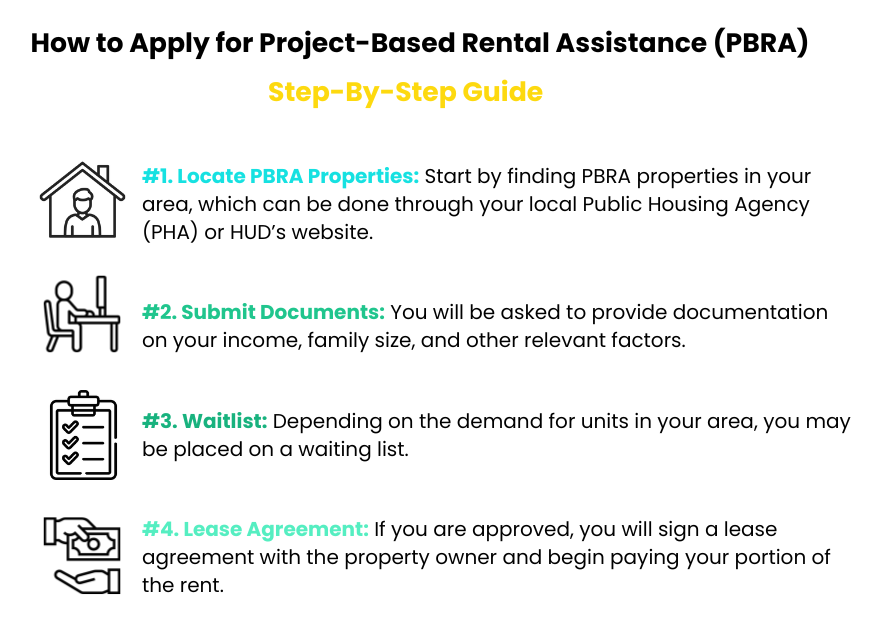
 Yes, PBRA housing is available in both urban and rural areas. However, the availability of PBRA units may be more limited in rural locations. Some important points to consider:
 To find PBRA housing in your area:
