How the SAH Grant Helps Disabled Veterans with Specially Adapted Housing
SAH grants help veterans create a home that promotes independence by funding necessary modifications. Here’s how it all works...
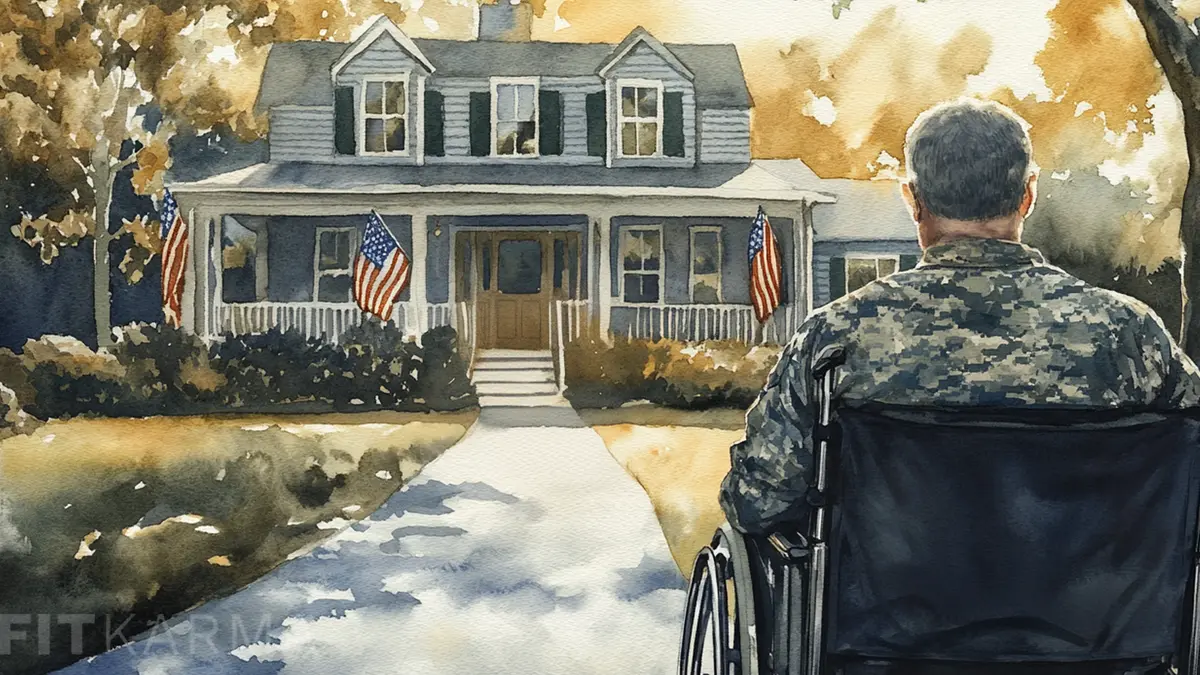
The SAH grant, or Specially Adapted Housing grant, is a vital resource for veterans and service members with severe service-connected disabilities, helping them adapt their homes to live more independently and comfortably. For the official rules and current amounts, see VA’s disability housing grants page.
Free DIY tool
VA Disability Pay Calculator
How much could my VA rating pay each month? Enter your ratings and family details to see your combined rating and estimated pay.
Try the free toolFor many veterans, navigating daily life can be a challenge, especially when it comes to ensuring their living space meets their accessibility needs. But what exactly does the SAH grant entail, and how can it benefit you or a loved one? In this article, we’ll explore the ins and outs of SAH grants, including eligibility requirements and the application process.
The Specially Adapted Housing grant is specifically designed to address the unique challenges faced by veterans with severe disabilities. Whether you’re looking to build a new home, modify an existing one, or purchase a property that accommodates your needs, the SAH grant can significantly enhance your quality of life.
If you think you might qualify, now is the time to dive into the VA’s application process and take that important first step toward a more accessible living environment!
To learn more about benefits and grants available to veterans, sign up for a free BenefitKarma account!
What is a Specially Adapted Housing (SAH) grant?
An SAH grant provides financial assistance to veterans and service members with severe service-connected disabilities to help them build, buy, or modify a home. The grant doesn’t have to be repaid. The goal is to make living spaces more accessible and allow veterans to live more comfortably and independently. The grant can be used to install ramps, widen doorways, lower countertops, and make other adaptations to support veterans with mobility challenges.
VA adjusts the maximum SAH grant each October 1 based on construction costs. For fiscal year 2026 (October 1, 2025 through September 30, 2026), the maximum SAH grant amount is $126,526.
Fiscal year 2027 began October 1, 2026. As of early November 2026, VA’s housing grants page still listed the FY2026 maximums, so check VA.gov for updated amounts before you apply.
Eligible veterans can use their SAH or SHA grant benefits up to six times combined during their lifetime, and TRA grants count toward the six. You don’t have to use the full grant amount at once, and unused funds can go toward future qualifying adaptations. The maximum available is based on the fiscal year in which you make your final use of the grant.
SAH, SHA, TRA, and HISA at a glance
| Grant | Who it’s for | FY2026 maximum | How to apply |
| Specially Adapted Housing (SAH) | Qualifying severe disabilities, such as loss of use of both legs, blindness in both eyes, or service-connected ALS | Up to $126,526 | VA Form 26-4555 |
| Special Home Adaptation (SHA) | Loss of use of both hands, certain severe burns, certain respiratory injuries | Up to $25,350 | VA Form 26-4555 |
| Temporary Residence Adaptation (TRA) | SAH- or SHA-eligible veterans living temporarily in a family member’s home | Up to $50,961 (SAH-eligible) / $9,100 (SHA-eligible) | Through your VA SAH agent |
| Home Improvements and Structural Alterations (HISA) | Medically necessary changes; a separate VA health care benefit | Up to $6,800 (service-connected) / $2,000 (non-service-connected), lifetime | VA Form 10-0103 through your VA medical center |
Who qualifies for an SAH grant?
To qualify for an SAH grant, you must have a qualifying service-connected disability, and you must own or plan to own the home. For most categories the disability must be permanent and total. For blindness and the post-9/11 category below, it must be permanent. A 100% disability rating alone doesn’t qualify you. The qualifying condition is what counts. Qualifying conditions include:
- Loss or loss of use of both legs, so that you can’t move without braces, crutches, canes, or a wheelchair
- Blindness in both eyes, with central visual acuity of 20/200 or less in the better eye with a corrective lens (a leg loss isn’t required)
- Loss or loss of use of one leg, together with the lasting effects of a disease or injury or the loss or loss of use of one arm, so that you can’t walk without aids
- Loss or loss of use of both arms at or above the elbow
- Certain severe burn injuries (full-thickness or subdermal burns) that cause contractures limiting movement in two or more extremities, or in at least one extremity and the trunk
- Service-connected amyotrophic lateral sclerosis (ALS) rated 100% disabling by VA, which applies to veterans and active-duty service members
- Loss or loss of use of one lower extremity on or after September 11, 2001, that is permanent and keeps you from balancing or walking without braces, crutches, canes, or a wheelchair (Congress limits this category to 120 grants per fiscal year)
Veterans with other qualifying conditions, such as loss of use of both hands, certain severe burns, or certain respiratory injuries, may qualify for the SHA grant instead. If you qualify for both, you’ll receive one grant, not both.
Free DIY tool
VA Disability Pay Calculator
How much could my VA rating pay each month? Enter your ratings and family details to see your combined rating and estimated pay.
Try the free toolYou can talk to a VA Specially Adapted Housing agent early, but VA confirms your eligibility through a rating decision.
What can you use an SAH grant for?
SAH grants are designed to make your home more accessible. Here are some of the ways you can use the funds:
- Building a new, specially adapted home: If your current home isn’t suitable, you can use the grant to construct a new home from scratch that meets your needs.
- Modifying an existing home: For veterans who already own a home, the grant can be used to make modifications like installing wheelchair ramps, widening doorways, or making the bathroom more accessible.
- Purchasing an adapted home: If you find a home that has already been modified for accessibility, you can use the grant to purchase it.
- Paying down the mortgage: In certain cases, you can apply the grant toward the unpaid mortgage balance on a home you own that is being adapted, or has already been adapted, to meet your accessibility needs. VA approval is required.
How much VA provides depends on how you use the grant, and the total is always limited by the grant maximum. For building a home, VA generally covers up to 50% of the cost of the home and land. For buying a home that’s already adapted, VA pays up to 50% of the cost or the unpaid balance, whichever is smaller. Remodeling an existing home uses a separate calculation based on the cost of the adaptations and, in certain circumstances, the cost or unpaid balance of the home and land. Your VA Specially Adapted Housing agent can explain how the funding applies to your project.
VA must also approve your plans and modifications before construction begins, so talk to your agent before you start any work.
How do you apply for an SAH grant?
Applying for an SAH grant involves several steps:
- Complete VA Form 26-4555: This form is the application for Specially Adapted Housing and Special Home Adaptation grants. You can submit it online on VA.gov, by mail, or with help from your VA Specially Adapted Housing agent.
- Provide the requested information: Provide the information the application asks for. VA will review your service-connected disability and may ask for additional documentation.
- VA evaluation: After you submit your application, VA will evaluate your eligibility based on your disability and housing needs. VA assigns a Specially Adapted Housing agent to help you through the process.
- Grant approval: If approved, VA will work with you to determine how the grant will be used, whether for a new home, modifications, or paying down a mortgage.
The process can take time, so it’s important to start early and ensure all your documentation is in order.
What other housing grants are available?
Try it: Smart VA Disability CalculatorEstimate your combined VA rating in under 2 minutes.
- Special Home Adaptation (SHA) grant: Provides up to $25,350 (FY2026) for veterans with qualifying disabilities, including loss of use of both hands, certain severe burns, and certain respiratory injuries, for home modifications. You or a family member must own or plan to own the home.
- Temporary Residence Adaptation (TRA) grant: Offers temporary financial aid to modify a family member’s home where you’re living temporarily. You must qualify for an SAH or SHA grant, and it’s a one-time use.
- Home Improvements and Structural Alterations (HISA) grant: A separate VA health care benefit that covers medically necessary changes, like handrails, ramps, or bathroom modifications. It’s a lifetime benefit of up to $6,800 for service-connected conditions and $2,000 for non-service-connected conditions, and it’s available to homeowners and renters. You apply through your VA medical center’s Prosthetic and Sensory Aids Service using VA Form 10-0103.
How do SAH grants impact other benefits?
An SAH grant works alongside other VA benefits, such as disability compensation and pension programs. It’s a separate benefit and doesn’t take the place of your monthly payments.
SAH grants and VA home loans can work together. You can use a VA home loan to buy a home and the SAH grant to pay for modifications, and the grant generally doesn’t reduce your VA home loan entitlement. SAH recipients may also qualify for Veterans’ Mortgage Life Insurance (VMLI), which can pay up to $200,000 toward your mortgage if you die.
To qualify, you generally must be under age 70, have received an SAH grant, hold title to the home, have a mortgage you’re obligated to repay, and use the home as your primary residence. The payout goes directly to your mortgage lender, not to your family.
Not sure what you qualify for?
A quick conversation can help you understand your options.
Optional — no obligation, fees may apply
Want help figuring out your next step?
Optional — fees may apply depending on your situation.
Some people choose to talk to a professional before taking their next step.
This might sound familiar:
You're not sure what to do next
You want someone to walk through your options
The process feels overwhelming
If that sounds like you, this might be worth a quick look.
Takes less than a minute
We only share your info with a service provider if you say yes.
Recommended Tools
Take action with our free tools
Get More from BenefitKarma
Create a free account to unlock all features
- Access premium benefit tools
- Personalized benefit matching
- Your personalized dashboard
Common questions about this guide
Get the latest benefit updates, straight to your inbox
Plain-English updates on SNAP, Medicaid, VA and Social Security — one email a week.
Get more from BenefitKarma
Free tools, personalized dashboard & more
