First 48 Hours After an Accident Checklist
What should I do right after an accident? Follow a step-by-step list for the first hours and days.
Free · No account needed · Private · About 1 minute

How it works
- 1
Say when it happened
Right now, earlier today, this week or longer ago.
- 2
Get your checklist
Steps are sorted by what matters most for your timing.
- 3
Check off each step
Mark what you have done and see what is left.
What you get
- Safety and medical steps to take first
- What to photograph and write down
- How to handle calls with insurers
- Next steps for the days that follow
What this tool does
- • Fits the checklist to how long ago it happened
- • Puts the most important steps first
- • Helps you keep notes while details are fresh
What this tool does not do
- • Does not replace emergency help. In an emergency, call 911
- • Does not contact police, insurers or lawyers for you
- • Does not give legal or medical advice
What should I do right after an accident?
Right after an accident, your safety comes first. Move to a safe place if you can, and get medical help if you are hurt. Some symptoms show up later, so write down how you feel over the next few days.
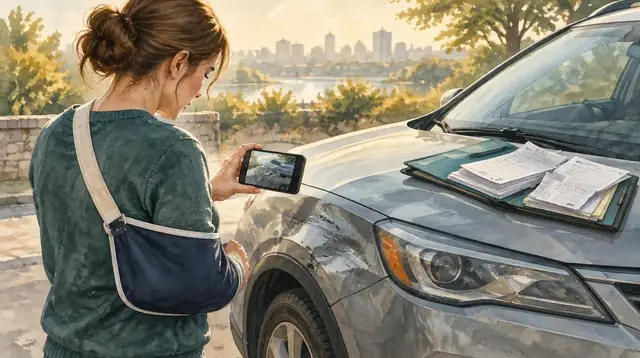
When it is safe, take photos and video of the scene, the damage and your injuries. Get the names and contact details of anyone who saw it happen. If police or security came, get the report or case number. Write a short note about what happened while you still remember.
When you talk to insurers, keep notes of who you spoke with and when. Stick to the facts and avoid guessing or admitting fault. If you are asked for a recorded statement, it is okay to ask questions first.
Common questions
Keep going

Words to know
Last reviewed September 26, 2026. For general information only, not legal or medical advice.
Sources: American Bar Association: Find Legal Help · USA.gov: Find a lawyer for affordable legal aid · HHS: Your right to get your medical records (HIPAA)
