Accident Evidence Checklist
What proof should I save after an accident? Build a checklist of photos, records, and bills to keep your claim organized.
Free · No account needed · Private · About 3 minutes
How it works
- 1
Tell us what happened
The type of accident and about when it happened.
- 2
Check what you have
Photos, witnesses, a report, a doctor visit, an insurance claim and more.
- 3
Get your evidence pack
A checklist grouped by type, with how to get each item.
What you get
- A checklist of medical records and itemized bills to request
- Lists for expenses, missed work, insurance and proof of what happened
- Tips on how to get each item
- A simple timeline to log symptoms, visits and events
What this tool does
- • Builds a list based on the type of accident
- • Shows where each record usually comes from
- • Flags payers who may want to be paid back, like health insurance
What this tool does not do
- • Does not collect records for you
- • Does not send anything to an insurer or court
- • Does not give legal advice
What proof should I save after an accident?
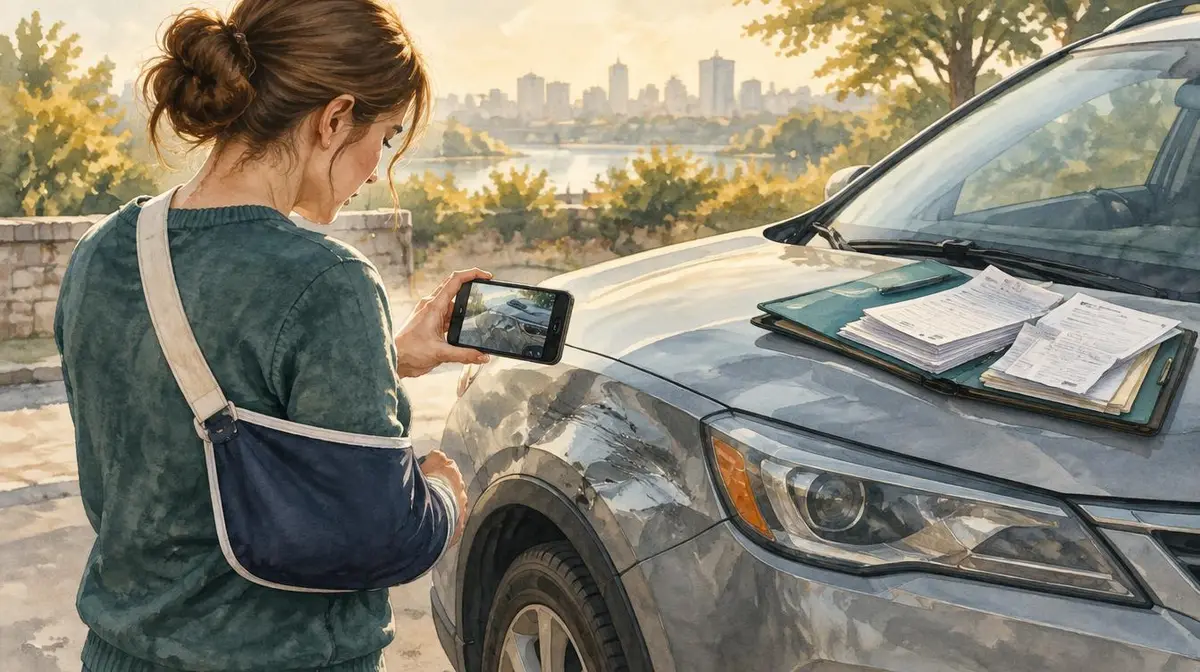
The proof you save after an accident helps show what happened, how you were hurt and what it cost you. Medical records and itemized bills show your injuries and care. Photos, a police or incident report and witness contact details help show what happened.
Keep track of money, too: receipts, mileage to appointments and proof of missed work, like pay stubs and an attendance record. For car crashes, find your insurance declarations page and claim number.
You generally have the right to get copies of your own medical records from your providers. Start early, because some records take time to arrive.
Common questions
Keep going


Words to know
Last reviewed September 26, 2026. For general information only, not legal or medical advice.
Sources: HHS: Your right to get your medical records (HIPAA) · CMS: Medicare recovery when you get a settlement · CFPB: Medical bills and debt collection · U.S. Department of Labor: State workers' compensation officials
